 Pin it
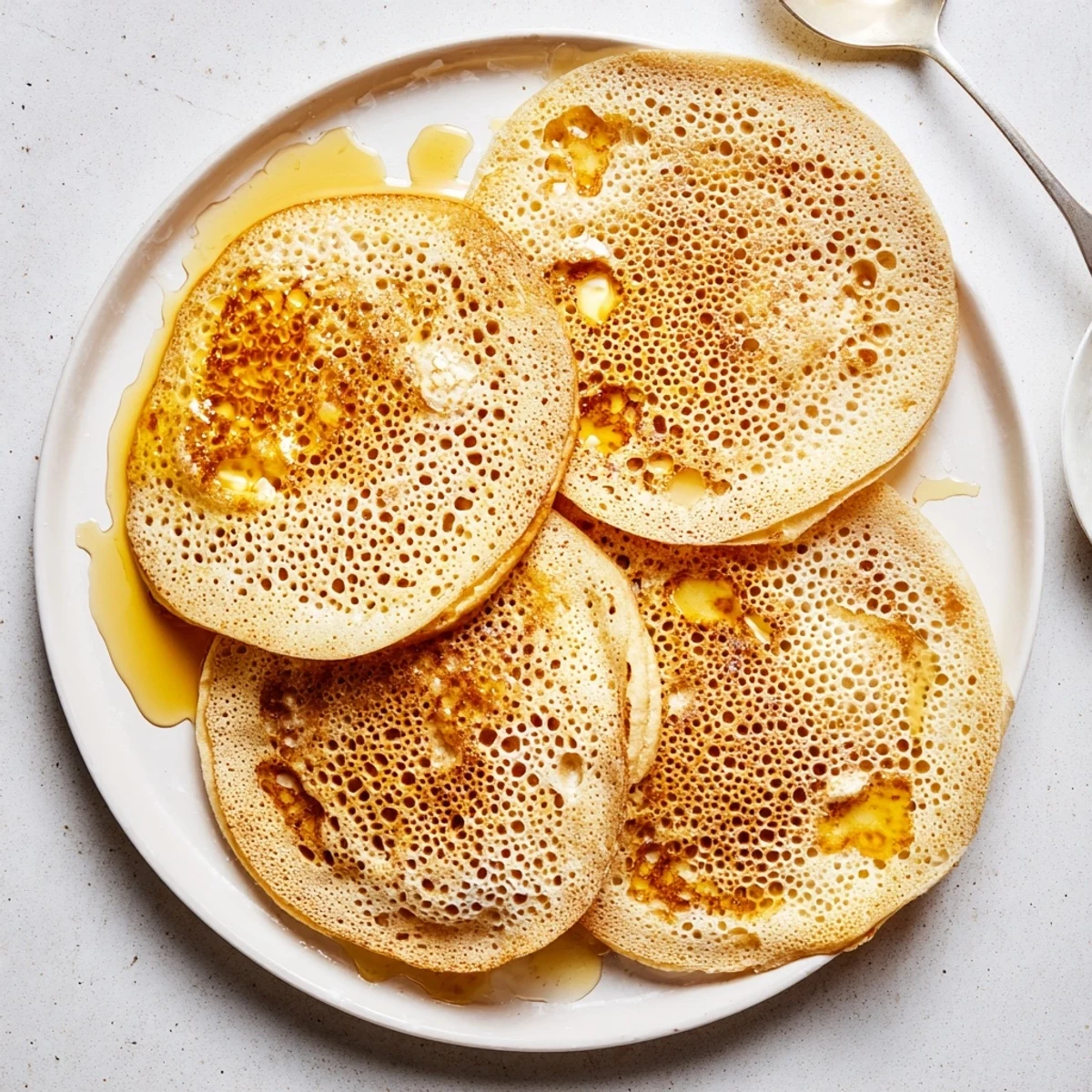
 These traditional Moroccan pancakes feature a distinctive honeycomb appearance that makes them perfect for soaking up butter and honey. The batter comes together quickly with semolina, flour, and a leavening combination of yeast and baking powder. After resting to develop those characteristic bubbles, the batter cooks on one side only until the surface is dotted with tiny holes.
The result is an incredibly light and airy texture that's simultaneously chewy and tender. Serve them warm with melted butter brushed over the surface and honey drizzled on top. The porous nature of baghrir means they absorb the sweet toppings beautifully, creating a delightful breakfast or snack that's popular throughout Morocco and North Africa.
The first time I watched my friend's mother make baghrir in her tiny Casablanca kitchen, I couldn't believe my eyes. She poured this runny, almost watery batter onto a hot pan, and somehow it transformed into these beautifully spongy pancakes dotted with thousands of tiny holes like honeycomb. Now these Moroccan pancakes are our weekend breakfast obsession, especially when we want something special without spending hours in the kitchen.
Last Sunday morning, my daughter woke up asking for 'the holey pancakes' and proceeded to eat six of them drizzled with extra honey. There's something magical about watching the bubbles appear on the surface as they cook, like little kitchen chemistry you can eat right away.
Ingredients
- Fine semolina: This is the secret to that signature spongy texture and nutty flavor
- All-purpose flour: Adds structure so the pancakes hold together despite all those air pockets
- Instant yeast: Creates the fermentation needed for those characteristic holes
- Baking powder: Gives extra lift and ensures the bubbles form evenly
- Sugar: A touch of sweetness balances the earthy semolina
- Salt: Essential to bring all the flavors together
- Lukewarm water: The hydration level is crucial for that runny batter consistency
- Unsalted butter: Melted and brushed on warm, it soaks into every pore
- Honey: Traditional topping that pairs perfectly with the slightly tangy semolina
Instructions
- Whisk the dry ingredients:
- Combine semolina, flour, instant yeast, baking powder, sugar, and salt in a large bowl until everything is evenly distributed
- Add the water:
- Gradually pour in lukewarm water while whisking constantly until you have a smooth, thin batter that's the consistency of heavy cream
- Let it rest:
- Cover the bowl and let it sit at room temperature for 30 minutes until bubbles start forming on the surface and the batter looks frothy
- Heat your pan:
- Warm a non-stick skillet or crepe pan over medium heat until a drop of water sizzles gently
- Pour the batter:
- Gently stir the batter and pour about 1/4 cup onto the pan, letting it spread naturally into a circle without tilting or manipulating the pan
- Cook on one side only:
- Wait until the surface is covered with tiny holes and the batter looks dry and set, about 2 minutes
- Keep them warm:
- Transfer to a clean kitchen towel and cover while you finish the rest of the batter
- Serve immediately:
- Brush with melted butter and drizzle generously with honey while still warm
 Pin it
 These pancakes became my go-to when friends stay over because they feel exotic and special but are actually so simple to make. Everyone gathers around the stove watching the bubbles appear, and somehow that makes them taste even better.
Making The Perfect Batter Consistency
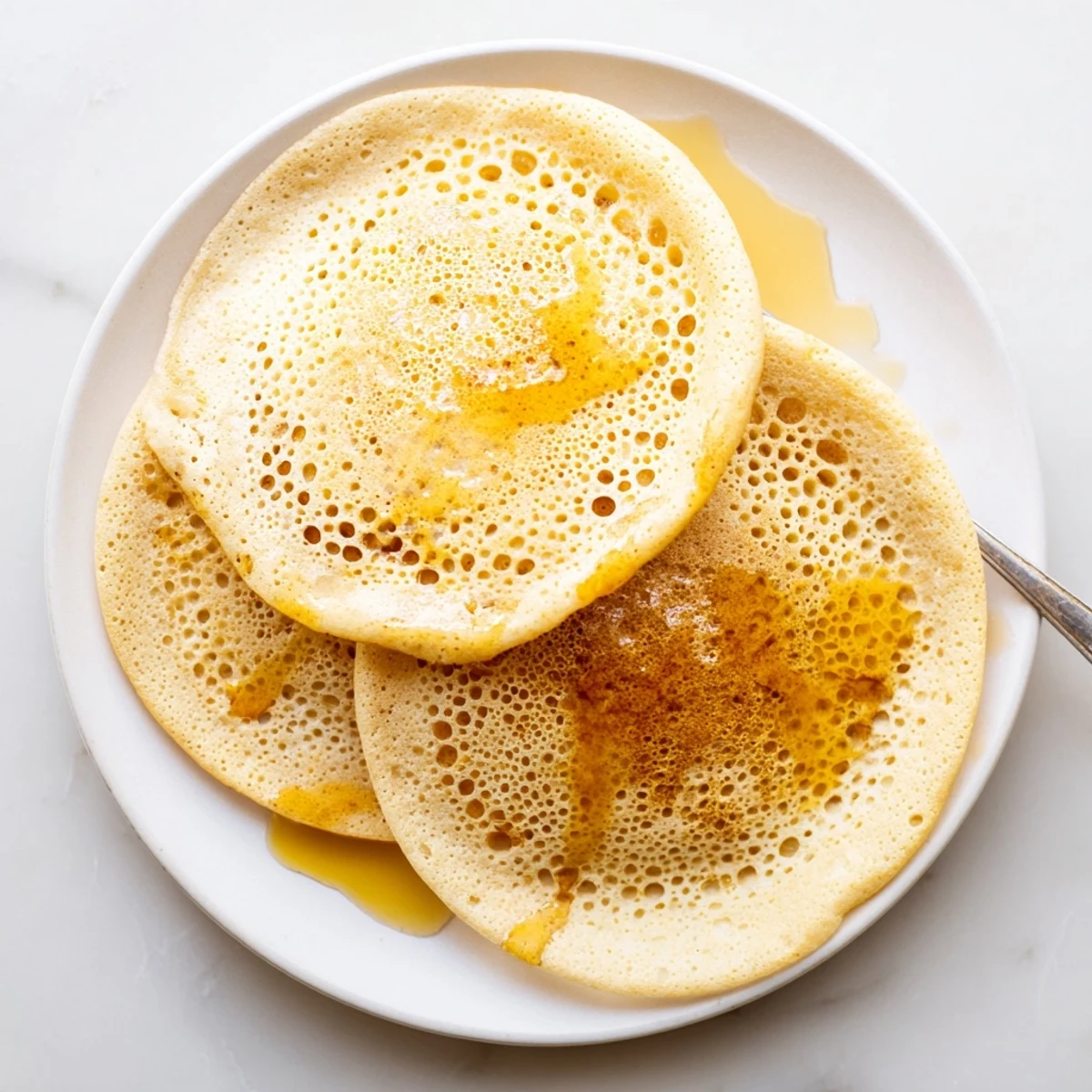
I've learned that the batter should be much thinner than you expect, almost like heavy cream or melted ice cream. If it's too thick, you'll end up with flat pancakes instead of those beautiful air-pocketed rounds.
Getting Those Signature Holes
The yeast needs time to work, so don't rush the resting period. Those tiny bubbles are what create the honeycomb pattern that makes baghrir so unique and perfect for soaking up toppings.
Serving Variations
While butter and honey is the classic combination, these pancakes are incredibly versatile. The spongy texture means they'll absorb whatever you drizzle on them beautifully.
- Try date syrup or agave for a different sweetness profile
- Jam or fruit preserves work wonderfully if you want something fruity
- Sprinkle chopped almonds or walnuts on top for added crunch
 Pin it
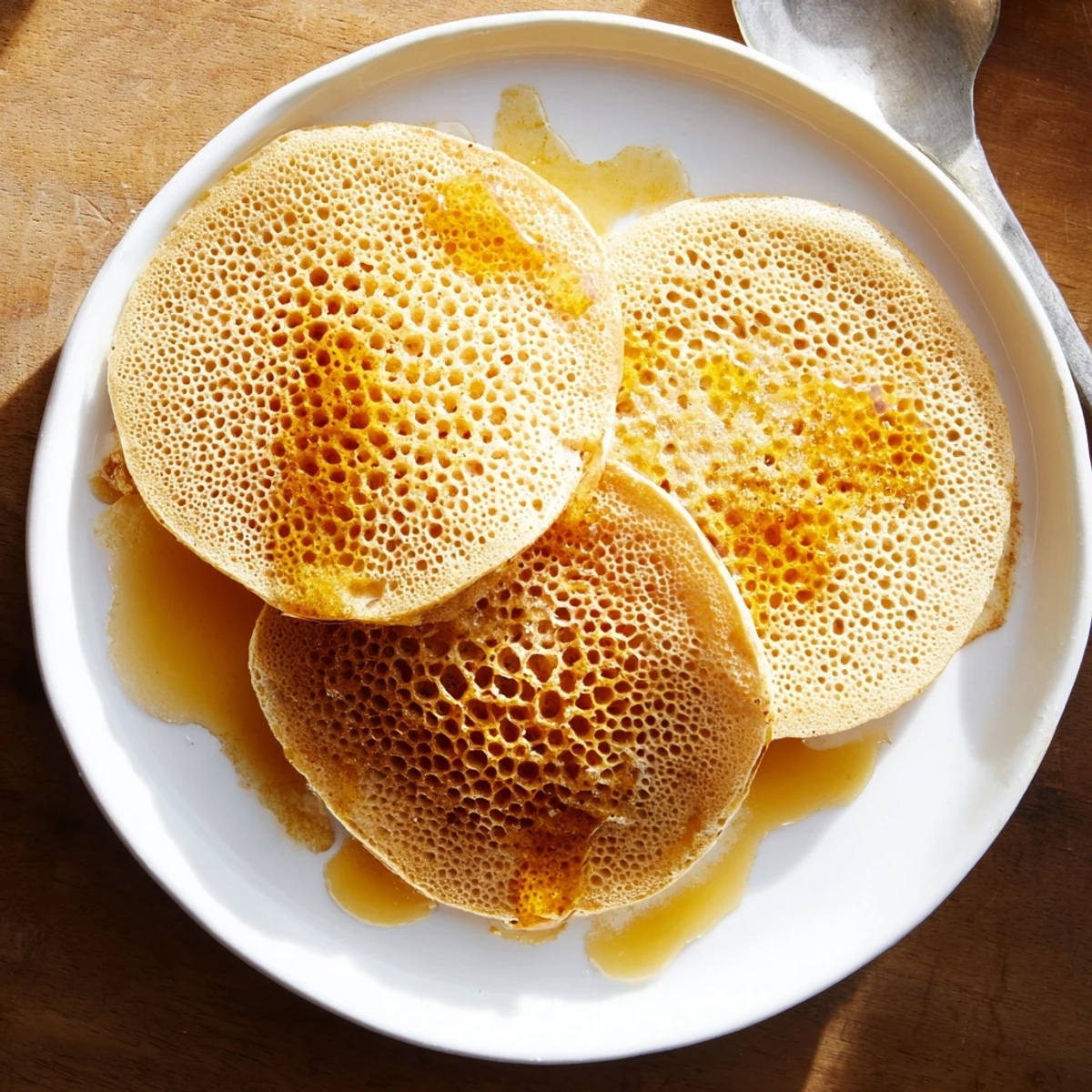
 There's something deeply comforting about a warm stack of these honeycombed pancakes, dripping with butter and honey, that makes any morning feel like a celebration.
Recipe FAQs
- → What makes baghrir different from regular pancakes?
-
Baghrir has a unique honeycomb texture created by bubbles forming during the resting period. Unlike traditional pancakes, baghrir cooks on one side only and develops a porous surface that perfectly absorbs butter and honey.
- → Why is my baghrir batter not forming bubbles?
-
The batter needs at least 30 minutes of resting time at room temperature for the yeast to activate and create bubbles. If your kitchen is cool, extend the resting time up to an hour. The batter should appear frothy before cooking.
- → Can I make baghrir ahead of time?
-
Yes, you can prepare the batter up to 24 hours in advance and store it in the refrigerator. Let it come to room temperature and give it a gentle stir before cooking. Cooked baghrir keeps well in the freezer for up to a month - reheat with butter before serving.
- → What's the best way to serve baghrir?
-
Traditionally served warm with melted butter brushed over the surface and honey drizzled on top. You can also try date syrup, maple syrup, jam, or Nutella. For savory versions, top with cheese, olives, or herbs instead of sweet toppings.
- → Why shouldn't I flip baghrir while cooking?
-
Baghrir is designed to cook on one side only. Flipping would flatten the characteristic bubbles and eliminate the honeycomb texture. The top remains slightly tacky but cooked through, creating the perfect surface for toppings to soak in.
- → Can I make baghrir without yeast?
-
Yeast is essential for authentic baghrir texture and those signature holes. However, you can substitute with additional baking powder, though the texture will be denser and less spongy. The resting period is still crucial for bubble development.