 Pin it
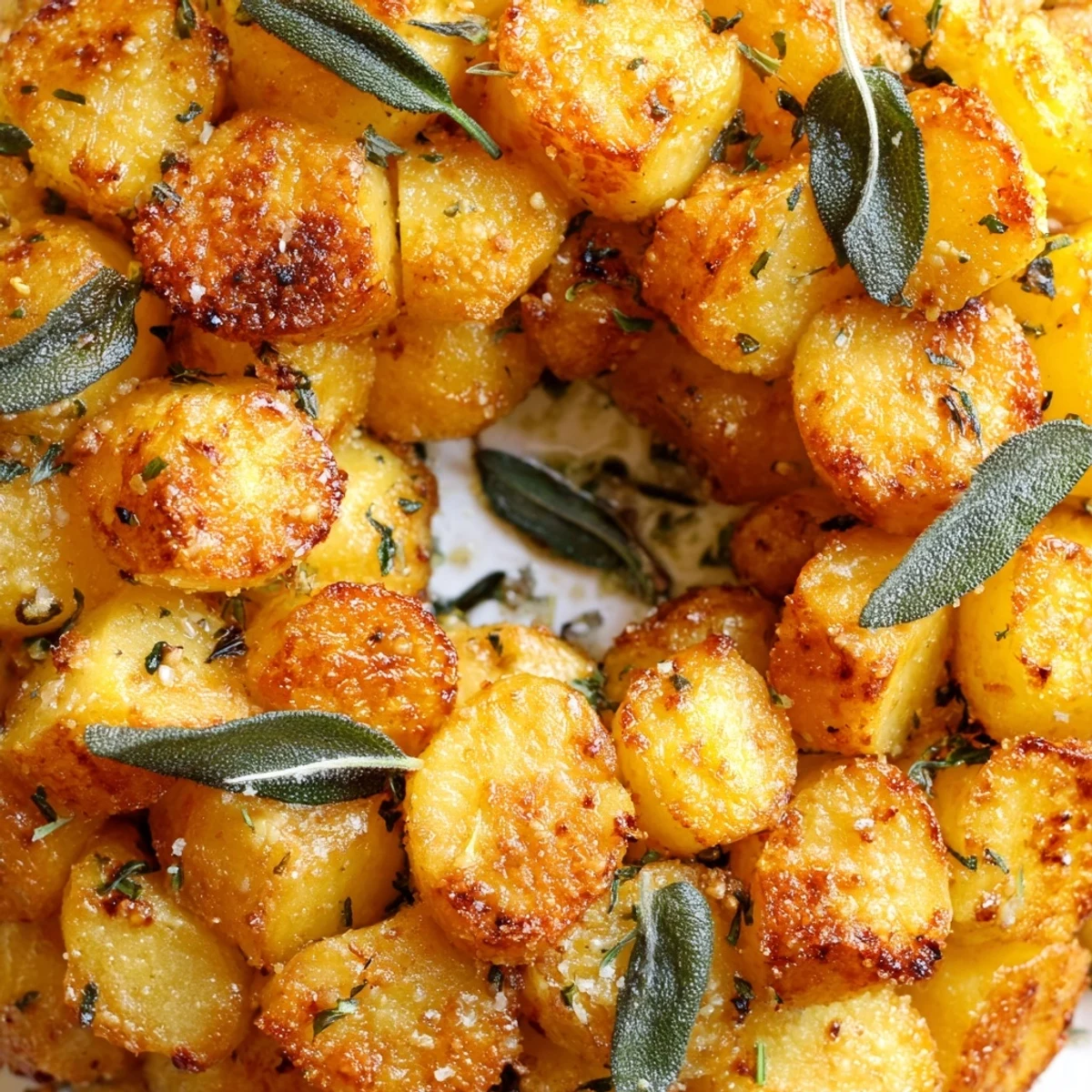
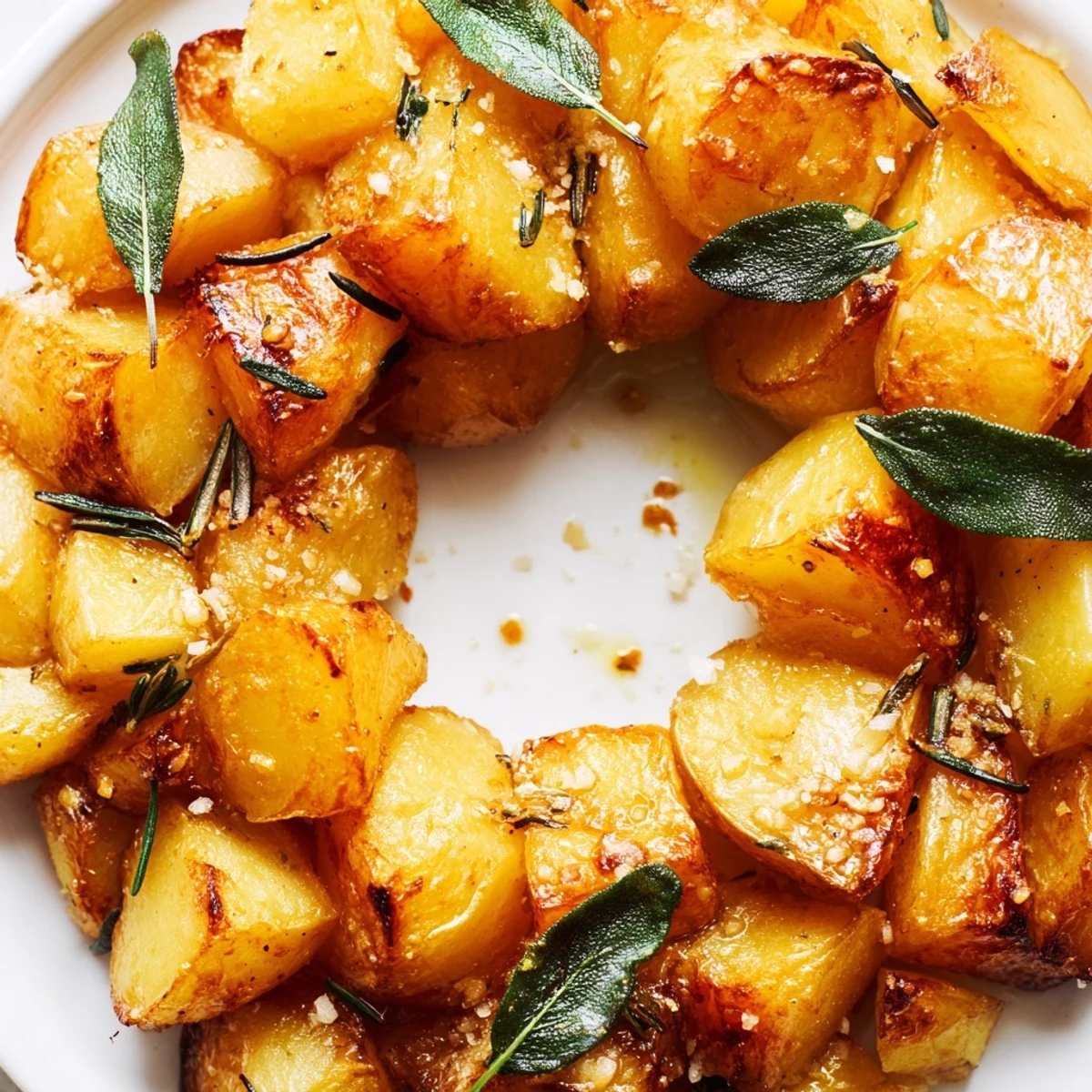
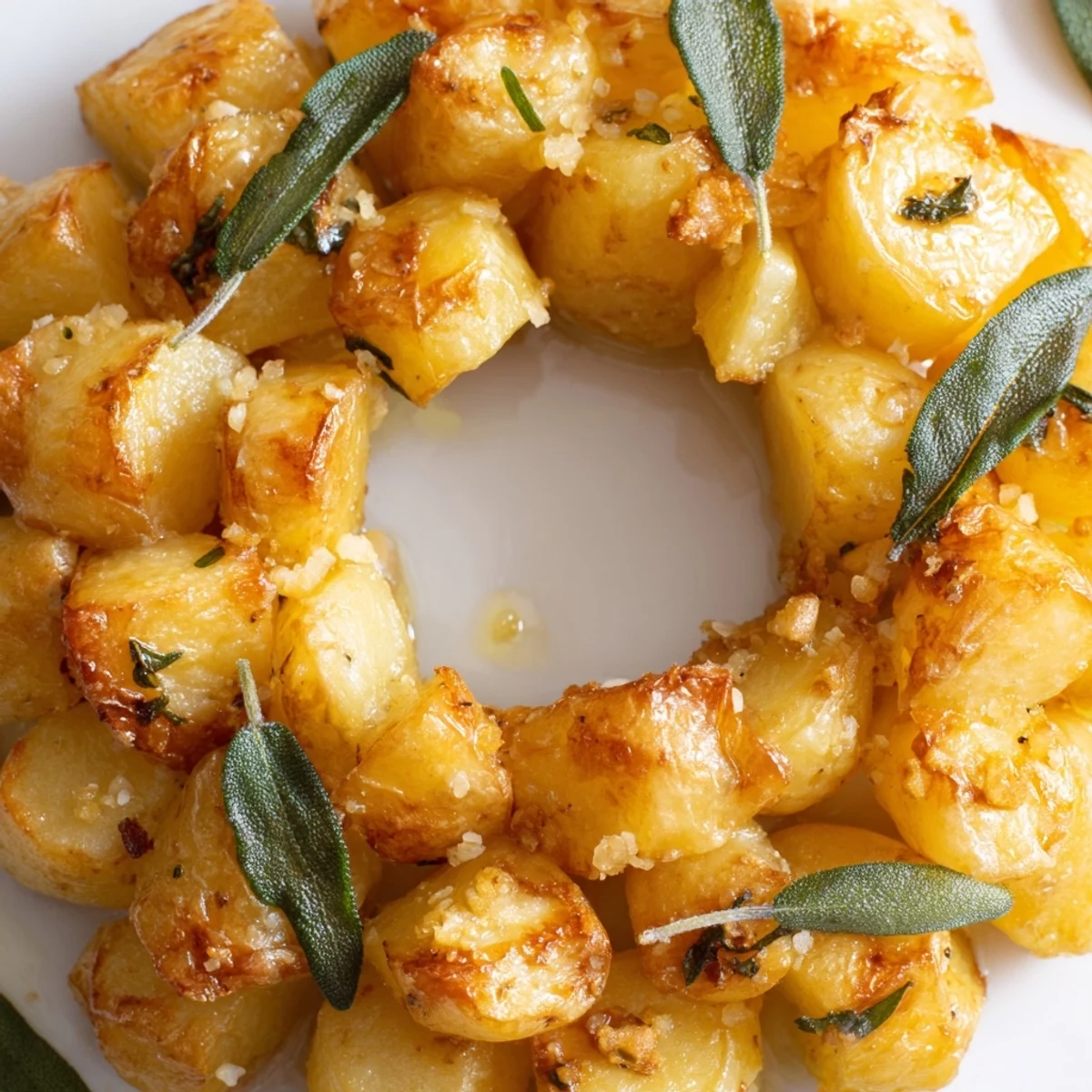
 This impressive wreath transforms humble roast potatoes into a stunning centerpiece. Yukon Gold potatoes are parboiled until tender, then coated generously with olive oil, melted butter, crushed garlic, and finely chopped fresh sage. Arranged in a circular ring and roasted at high heat, the potatoes develop irresistibly crispy edges while staying fluffy inside. Halfway through roasting, additional olive oil is brushed over the surface, and whole sage leaves are scattered across the top for extra aroma and visual appeal. The result is a golden, fragrant wreath that's as beautiful as it is delicious.
The kitchen was already smelling like butter and promise when I first attempted this wreath. I had guests coming over and wanted something that felt like a hug on a plate but looked like I had tried harder than I actually had. The moment it emerged from the oven, golden and fragrant with sage, I knew it would become a regular at my table.
Last Christmas, my aunt leaned over the serving platter and asked how long it took me to arrange each potato so perfectly. I laughed and told her the truth about how I had accidentally knocked half the wreath out of shape while transferring it and had to frantically piece it back together. She still asks for the recipe every time we talk.
Ingredients
- 1.5 kg Yukon Gold or Maris Piper potatoes: These waxy varieties hold their shape beautifully while still getting fluffy inside, peel them and cut into uniform chunks
- 4 tbsp olive oil: The foundation of that golden crust, do not be tempted to reduce this
- 40 g unsalted butter, melted: Butter adds richness that pure oil cannot match, melt it gently so it combines easily
- 6 garlic cloves, crushed: Mince these finely so they distribute evenly through the coating
- 15 fresh sage leaves, finely chopped: Fresh sage is nonnegotiable here, it becomes almost crispy and wonderfully aromatic
- 1 tsp sea salt and ½ tsp black pepper: Generous seasoning is crucial since these are the main flavors
- 10 small fresh sage leaves, whole: These whole leaves become like little herb chips on top
- 1 tbsp olive oil for finishing: This final brush helps the last sage leaves crisp up beautifully
Instructions
- Prep your oven and pan:
- Preheat to 220°C (430°F) and line a large baking tray with parchment paper, the paper matters for easy transfer
- Parboil the potatoes:
- Cover potato chunks with cold salted water, simmer for 7 to 8 minutes until just tender, then drain and let steam dry for 2 minutes
- Coat with flavor:
- Return potatoes to the pan, add olive oil, melted butter, crushed garlic, chopped sage, salt and pepper, toss gently until every piece is dressed
- Shape the wreath:
- Arrange on your prepared tray in a ring, leaving a hole in the center, press gently so the pieces hold onto each other
- First roast:
- Roast for 35 minutes, turning halfway through so all sides get that golden kiss of heat
- Add the finishing touch:
- Press the wreath together again if it has spread, brush with remaining oil, scatter whole sage leaves on top
- Final roast:
- Return to oven for 15 to 20 minutes until potatoes are deeply golden and the sage leaves are crisp and fragrant
- Service time:
- Transfer carefully to your serving platter and bring to the table while still steaming hot
 Pin it
 The first time I made this, I served it alongside a simple roast chicken and watched as everyone reached around the bird to get more potatoes. By the end of the meal, the wreath was just a memory, and that is when I knew this recipe was a keeper.
Making It Your Own
I have discovered that tossing the parboiled potatoes in a tablespoon of polenta or semolina before coating creates an even crunchier exterior. The fine grit acts like a breading without being heavy or distracting from the potato itself.
The Sage Secret
Fresh sage can vary in intensity, so taste a small leaf before chopping. Sometimes I add the chopped sage right at the coating stage, but other times I mix half into the oil and butter mixture first to infuse it more deeply into every crevice.
Serving Suggestions
This wreath is substantial enough to be the star of a vegetarian meal or a stunning companion to any roast. I have also served it as part of a brunch spread with eggs and found that the sage pairs surprisingly well with morning flavors.
- Try a yogurt herb dip on the side for cooling contrast
- Grate some Parmesan over the last 5 minutes if you want extra richness
- For dairy free, simply use all olive oil and skip the butter entirely
 Pin it
 There is something deeply satisfying about serving food that looks as good as it tastes, and this wreath delivers both in spades.
Recipe FAQs
- → What type of potatoes work best for this wreath?
-
Yukon Gold or Maris Piper potatoes are ideal choices because they have a naturally creamy texture and hold their shape well during parboiling and roasting. Their medium starch content produces perfectly fluffy interiors with crispy exteriors.
- → Can I prepare this wreath ahead of time?
-
You can parboil the potatoes and toss them with the garlic sage mixture up to 4 hours ahead. Keep them refrigerated, then bring to room temperature before arranging and roasting. For best results, roast just before serving.
- → How do I get the crispiest results?
-
Parboiling the potatoes is essential—the surface roughens during this process, creating extra crunch potential. For ultimate crispiness, coat the drained potatoes in 1 tablespoon polenta or semolina before adding the oil and butter mixture.
- → Can I make this dairy-free?
-
Absolutely. Simply replace the melted butter with additional olive oil. The wreath will still achieve beautiful golden color and crispy texture, though the buttery richness will be slightly different.
- → What should I serve with this potato wreath?
-
This wreath makes a spectacular side dish for roast chicken, beef tenderloin, or holiday ham. It also pairs wonderfully with grilled vegetables and can be served alongside a creamy yogurt-herb dipping sauce for extra indulgence.
- → Why press the potatoes together during roasting?
-
Gently pressing the potatoes together helps maintain the wreath shape as they shrink slightly during cooking. This ensures your centerpiece holds its form while still developing those sought-after crispy edges on every piece.