 Pin it
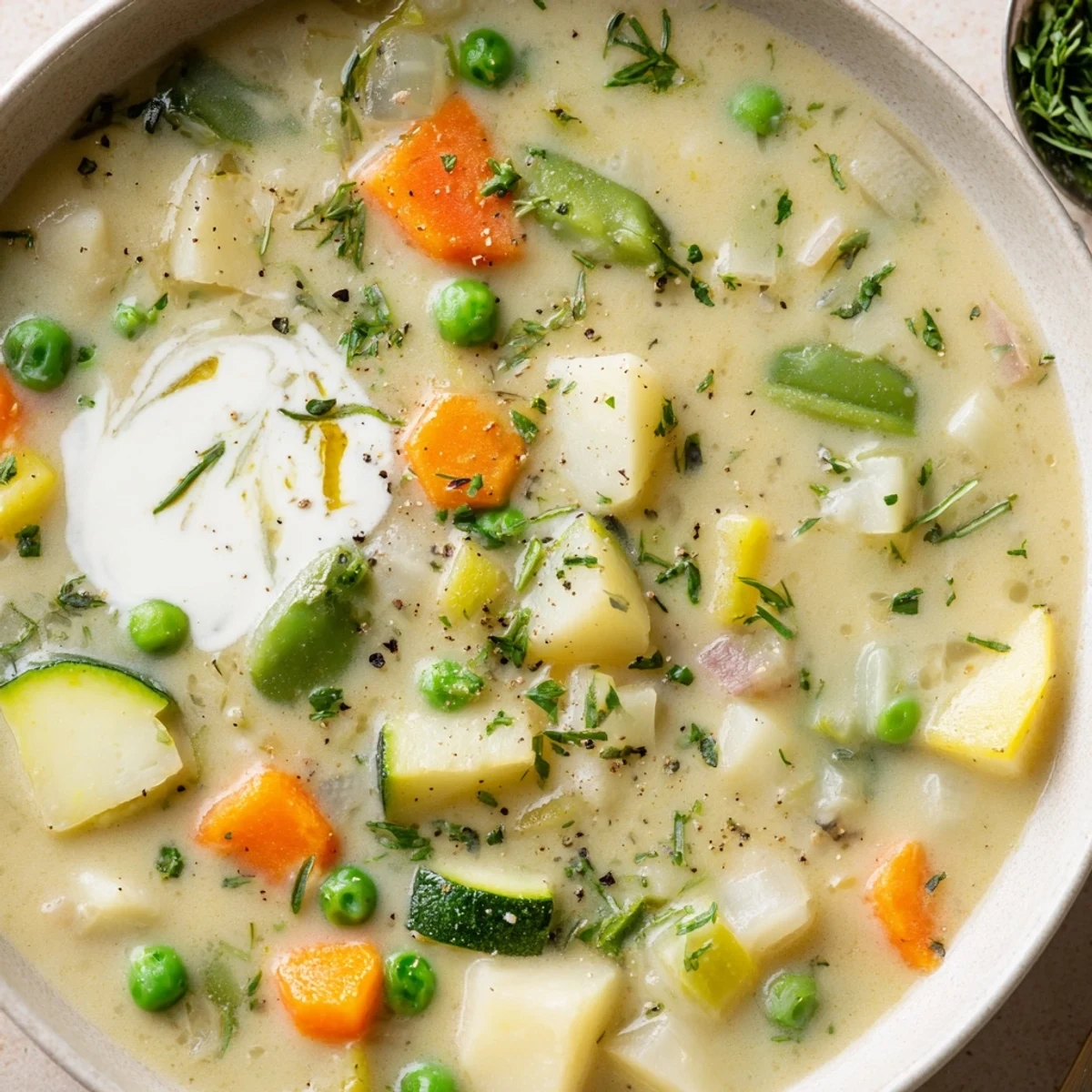
 This velvety vegetable soup begins with sautéed onion and garlic, then adds carrots, celery, potato, zucchini, green beans and peas simmered in seasoned broth. Purée for a smooth finish or leave some texture; stir in cream or coconut milk for a dairy-free option. Ready in about 45 minutes and ideal with crusty bread.
There are evenings when the rain whispers against the window and all I want is something soothing simmering on the stove. Creamy vegetable soup became one of those quiet kitchen companions after a week of trying to use up as many veggie odds and ends as possible. My first attempt was much too chunky, a colorful heap in my favorite blue pot, but curiosity kept me tweaking until the texture turned satisfyingly velvety. There’s an unexpected comfort in transforming a basket of vegetables into something so luxuriously simple.
One particular October, with leaves everywhere and the clocks about to change, my neighbor dropped off an overflowing bag of garden green beans at my door. That afternoon, I made this soup for both our families, and I’ll never forget the way we all kept getting up for seconds—half laughing, half competing for the last ladleful.
Ingredients
- Olive oil: Adds just enough richness to coax the best flavors from your onions and garlic; I find a good, peppery olive oil makes a difference.
- Onion: I always go for a medium yellow onion—dice it fine for melt-in-your-mouth softness.
- Garlic: Don’t skip it; I’ve learned that a proper mincing really does mellow out into the broth.
- Carrots: Their sweetness is subtle but essential; slice them evenly so they cook at the same pace as the celery.
- Celery: It disappears into silkiness, but its gentle flavor is the backbone here.
- Potato: Adds body and a natural creaminess without any fuss; I like russet or Yukon Gold for blending well.
- Zucchini: A mild, green touch—if yours has thicker skin, consider peeling it for extra smoothness.
- Green beans: Fresh is wonderful, but frozen will work in a pinch; cut them small for even bites.
- Peas: I’ve used both frozen and fresh—toss them in near the end to keep things bright.
- Vegetable broth: Go for one you’d happily sip on its own, and don’t forget, gluten-free if needed.
- Dried thyme: A teaspoon feels just right—not overpowering but deepening every spoonful.
- Dried parsley: Its earthiness rounds things out; sprinkle in with confidence.
- Bay leaf: Adds a quiet backdrop of aroma—remember to fish it out before blending.
- Salt and black pepper: Season often and taste as you go; the soup’s flavor blossoms over time.
- Heavy cream or coconut milk: The cream brings lusciousness, coconut milk for a dairy-free spin—add at the end for silkiness.
- Fresh parsley: Totally optional but a sprinkle just before serving makes each bowl pop.
Instructions
- Build the foundation:
- Pour the olive oil into your biggest pot, let it warm, then tumble in onions and garlic, stirring until you catch that sweet, fragrant sizzle.
- Add heartier veggies:
- Carrots, celery, and potato join the pot; give everything a good toss and let the vegetables soften, just until the edges lose their sharpness.
- Layer in green veggies:
- Drop in the zucchini, green beans, and peas; they add color and need only a brief turn over the heat before moving on.
- Pour and season:
- In goes the vegetable broth along with thyme, dried parsley, bay leaf, salt, and pepper—stir, then raise the heat and wait for a happy, rolling boil.
- Simmer and soften:
- Lower the heat to a gentle bubble, cover, and let the vegetables relax and mingle for twenty to twenty five minutes, or until everything pierces easily with a fork.
- Blend away:
- Fish out the bay leaf, then use an immersion blender right in the pot until the texture is as creamy or chunky as you prefer.
- Creamy finish:
- Pour in the cream or coconut milk, stirring gently as the soup transforms into a velvety swirl; warm just until heated through.
- Serve & enjoy:
- Ladle into bowls, nestle a bit of fresh parsley on top, and let everyone dig in while it’s steamy.
 Pin it
 The first chilly evening when my house smelled like thyme and onion, I realized this soup had become a little tradition. There’s something special about watching people break bread, pass pepper, and settle into comfort with something homemade.
How to Pick the Best Veggies
Start with what’s freshest at your store or market; sometimes a handful of leftover greens or even a surprise fennel bulb make for an unexpected twist. The better the veggies at the start, the brighter and more nuanced your final bowl will taste. If you spot tiny potatoes or sweet baby carrots, don’t hesitate to swap them in for regular varieties—it’ll only add depth. A good mix of root and green vegetables always seems to play off each other beautifully.
Customizing for Dietary Needs
This soup is easy to tweak: coconut milk makes it instantly vegan, and gluten-free broth keeps it safe for celiac friends. When I had a guest with a dairy allergy, I once pulsed in soaked cashews for an incredible plant-based creaminess. Don’t be shy with alternate herbs either—a pinch of dill totally changes the personality of the pot. Flavorful and flexible is the name of the game.
Make-Ahead, Storage, and Serving Ideas
On busy weeks, I double the recipe and tuck leftovers in the fridge for an easy lunch. The soup keeps beautifully for up to four days and actually tastes better the next day. Making it ahead also means you can focus on adding a simple garnish or toasting up some favorite bread just before serving.
- Freeze single portions in jars for a quick weeknight meal.
- Stir in some spinach or kale just before serving for a pop of green.
- Serve with a squeeze of lemon if you like things zippy.
 Pin it
 This soup turns any ordinary evening into something a little warmer and a little more memorable. I hope it brings you as much quiet joy as it brings me, one bowl at a time.
Recipe FAQs
- → Can I make this dairy-free?
-
Yes. Replace heavy cream with canned coconut milk or another plant-based cream at the end of cooking for a silky finish without dairy.
- → How can I thicken it without cream?
-
Simmer longer to reduce liquid, purée more of the cooked vegetables, or mash a portion of the potatoes to naturally thicken the broth.
- → Are frozen vegetables acceptable?
-
Frozen peas and green beans work well; add them later in cooking to avoid overcooking. Frozen mixed vegetables can be used but may need slightly longer simmering.
- → How should I store and reheat leftovers?
-
Cool completely, refrigerate in an airtight container for 3–4 days, or freeze up to 2 months. Reheat gently on the stove, adding a splash of broth or milk if needed.
- → What herbs or spices elevate the flavor?
-
Dried thyme and parsley are classic; finish with chopped fresh parsley. A pinch of nutmeg or a squeeze of lemon brightens the dish.
- → Can I add leafy greens?
-
Yes—stir in a handful of chopped spinach or kale in the last few minutes of simmering so they wilt but keep color and texture.