 Pin it
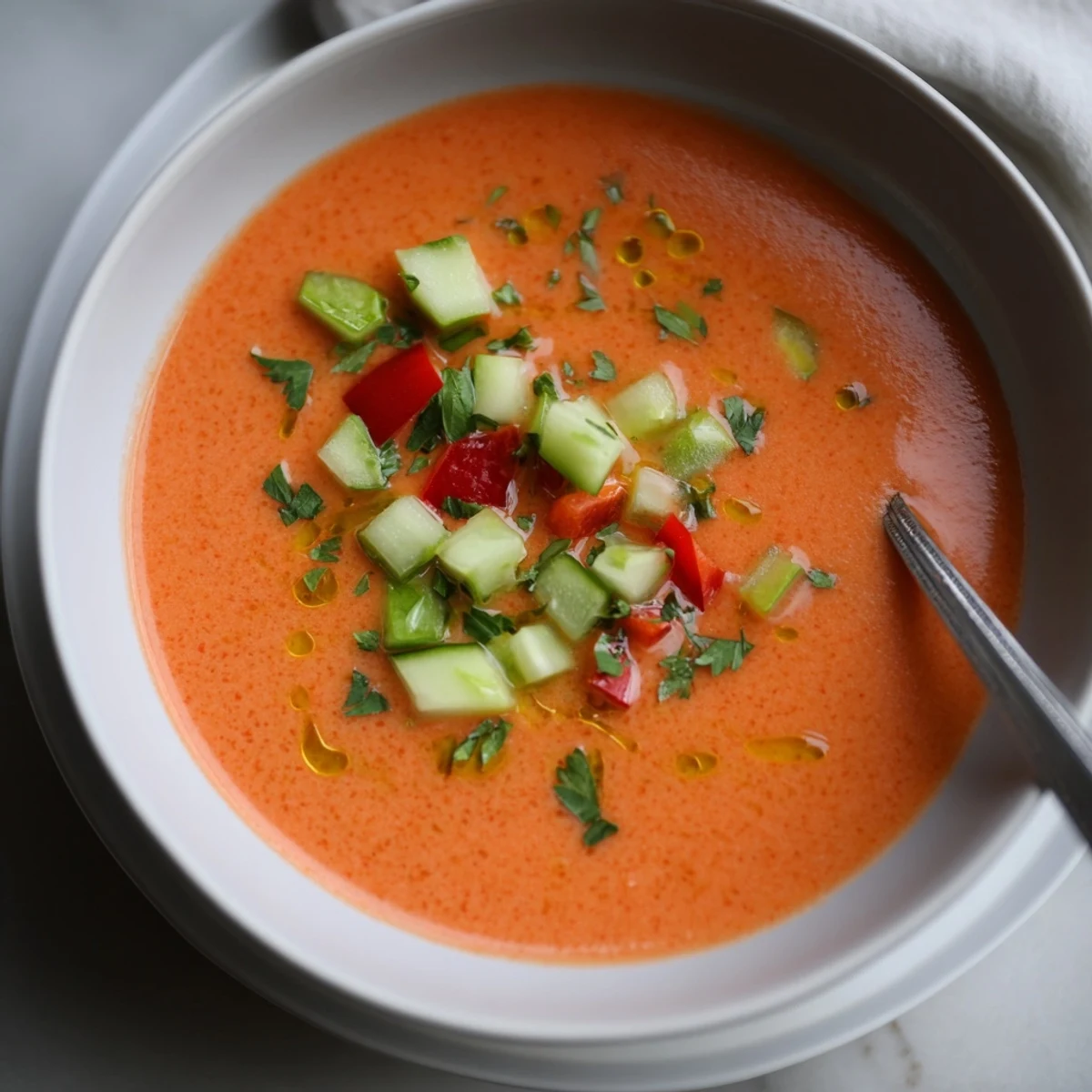
 This classic Spanish cold soup combines the freshest summer produce—juicy ripe tomatoes, crisp cucumber, colorful bell peppers, and aromatic herbs—into one refreshing bowl. The preparation comes together in just 20 minutes using a blender, requiring no cooking at all. After chilling for at least two hours, you'll have a silky, vibrant soup that's perfect for sweltering summer days or as an elegant light starter.
Traditionally served well-chilled with colorful diced vegetable garnishes, a drizzle of premium olive oil, and perhaps some crusty bread on the side. The sherry vinegar adds a pleasant brightness that balances the natural sweetness of the tomatoes. You can easily customize the texture—strain for an ultra-smooth finish or leave slightly chunky for more body. Either way, this naturally vegetarian, vegan, and gluten-free soup lets peak-season vegetables shine.
The exhaust fan in my apartment broke during a July heat wave, and the thought of turning on the stove made me want to move into my refrigerator. That was the summer gazpacho saved my sanity, a cold screaming red soup that asked nothing of me but a blender and patience. I ate it standing over the kitchen sink, barefoot, spooning it straight from the container for three days straight.
My friend Marta, who grew up near Seville, once watched me make gazpacho and gently told me I was overthinking it. She grabbed my blender, dumped everything in at once, and said the only rule that matters: use tomatoes that smell like tomatoes. She was right, and I never went back to measuring carefully.
Ingredients
- Ripe tomatoes (800 g): This is the soul of the soup, so find the reddest, softest, most fragrant ones you can. Farmers market hauls in late summer are ideal, but decent greenhouse tomatoes work if you let them ripen on the counter a few extra days.
- Cucumber (1 medium): Peel and seed it to avoid any bitterness or tough bits interrupting the smooth texture. English cucumbers are a great choice because their seeds are minimal and the skin is tender.
- Red bell pepper (1 medium): Adds a subtle sweetness that rounds out the acidity of the tomatoes. Roasting it first is unnecessary here, raw is traditional and keeps things fresh.
- Red onion (1 small): Just enough sharpness to give the soup backbone. Soak the chopped pieces in cold water for ten minutes if you find raw onion too aggressive.
- Garlic (2 cloves): Use fresh cloves and remove the green germ if you see one, it can taste bitter. Start with two and add more only after tasting the blended result.
- Fresh parsley or cilantro (2 tbsp): Parsley is more traditional, but cilantro gives a lovely twist if you are leaning into a brighter flavor profile.
- Extra virgin olive oil (4 tbsp): This emulsifies the soup and gives it a luxurious, silky mouthfeel. Use the good stuff here since it is a raw ingredient and its flavor shines through completely.
- Sherry vinegar or red wine vinegar (2 tbsp): Sherry vinegar is authentically Spanish and worth seeking out for its complex, slightly nutty tang. Red wine vinegar works in a pinch but tastes sharper.
- Cold water (250 ml): Adjusts the consistency to something spoonable rather than paste like. Start with the full amount and add more if you prefer a thinner soup.
- Sea salt and black pepper: Season boldly because cold food needs more salt than you think. Taste after blending and adjust before chilling.
Instructions
- Rough chop everything:
- Cut the tomatoes, cucumber, pepper, and onion into chunks small enough for your blender to handle without struggling. There is no need for precision here, everything gets pulverized anyway.
- Blend the base:
- Add the vegetables, garlic, and herbs to your blender or food processor and run it until the mixture is mostly smooth with just a bit of texture remaining. Stop before it turns completely liquid if you like some body.
- Add liquids and season:
- Pour in the olive oil, vinegar, cold water, salt, and pepper, then blend again until everything is thoroughly combined and the soup looks glossy. Taste it now because this is your chance to fix it before it chills.
- Strain if desired:
- For a velvety restaurant style texture, press the soup through a fine mesh sieve into a clean bowl, discarding the pulp. Skip this step if you prefer a rustic, hearty version with more fiber and character.
- Chill thoroughly:
- Transfer to a covered container and refrigerate for at least two hours so the flavors marry and the temperature drops to something genuinely refreshing. Overnight is even better if you can wait that long.
- Serve with garnishes:
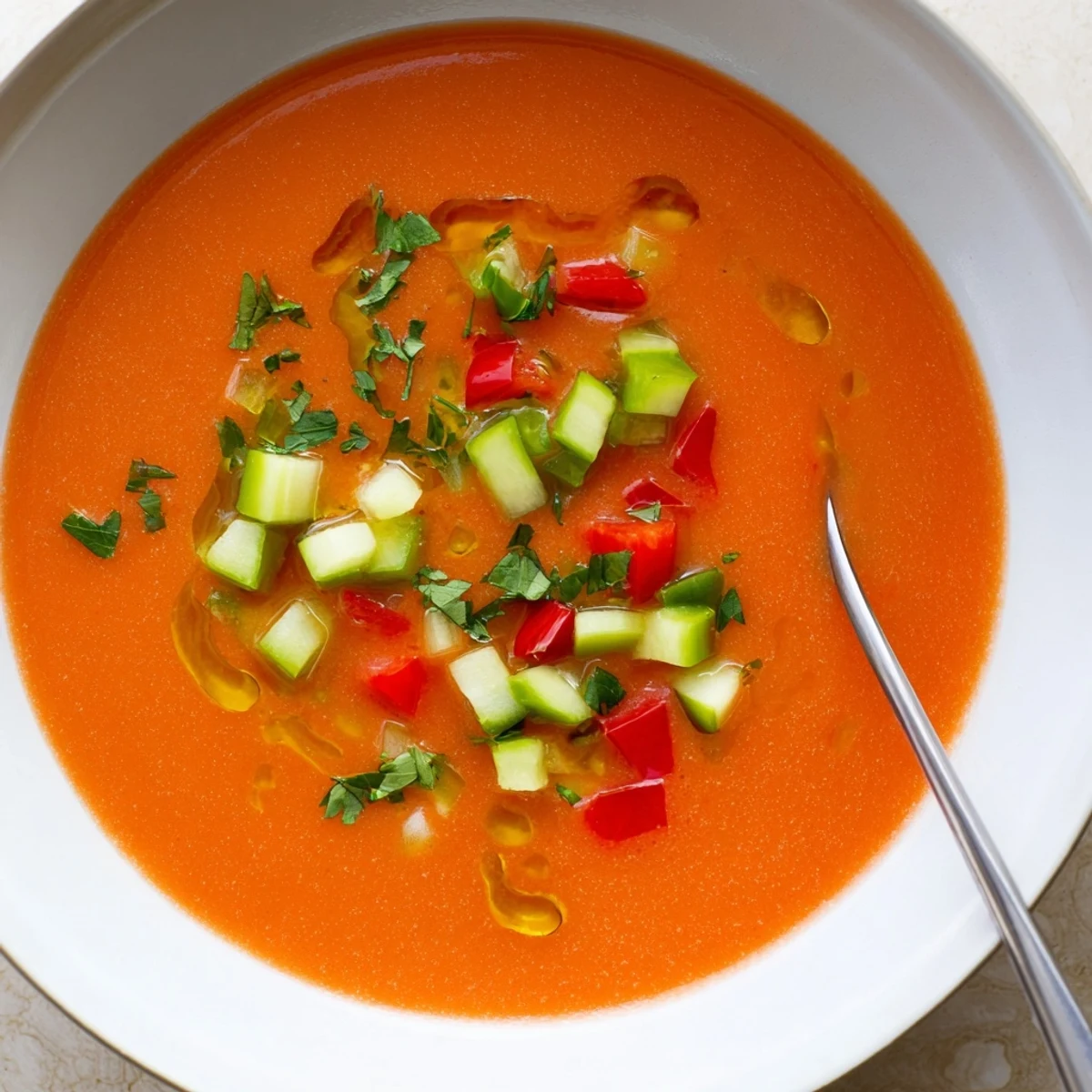
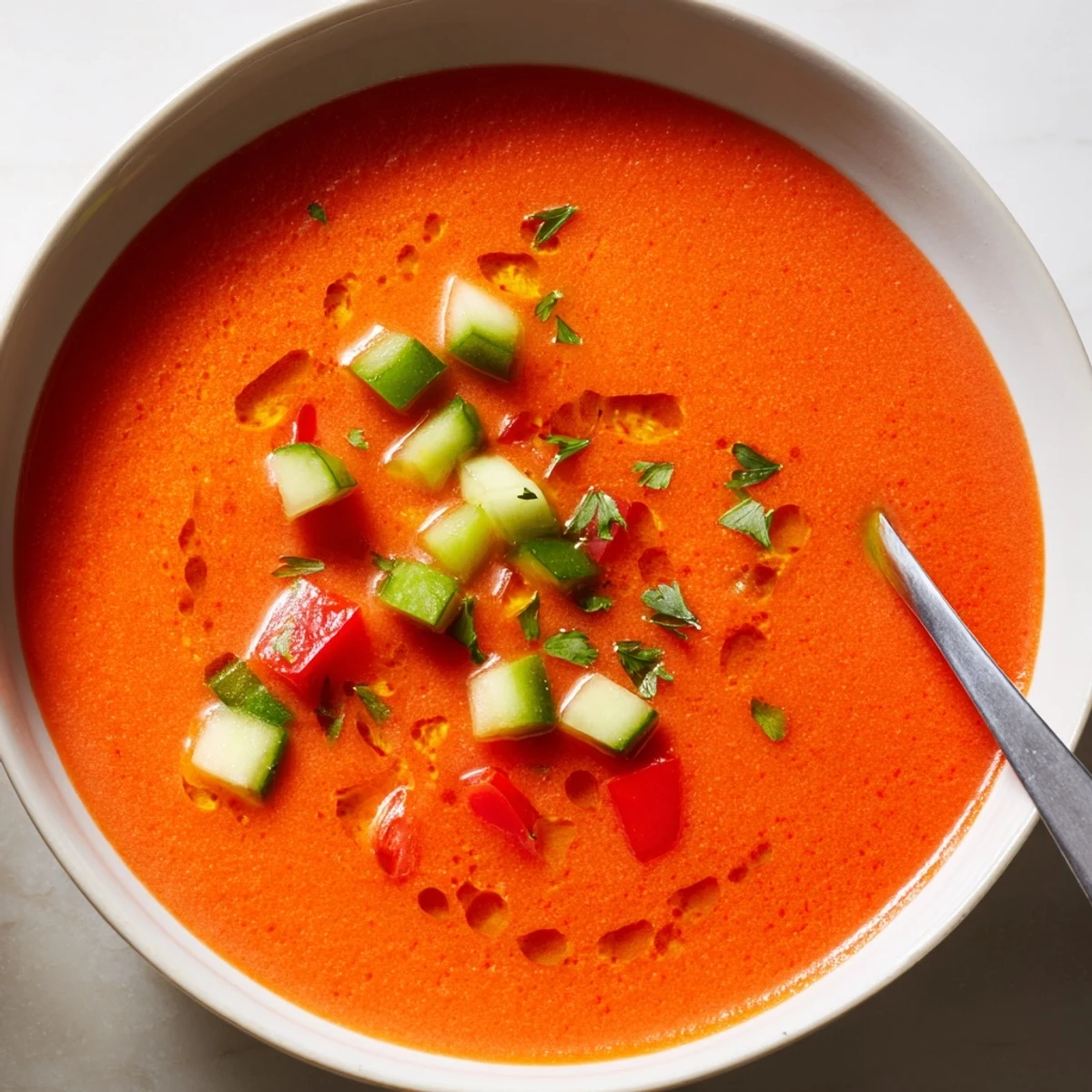
- Stir well, ladle into bowls, and top with diced cucumber, bell pepper, herbs, croutons, or a generous drizzle of your best olive oil. Let everyone customize their own bowl at the table.
 Pin it
 I once packed gazpacho in a thermos for a beach picnic and ended up passing it around to strangers who wandered over asking what smelled so incredible. That is the thing about this soup, it turns any outdoor meal into an event without any effort at all.
What Tomatoes Actually Work Best
Heirlooms are stunning but often watery, while Roma and plum varieties give you concentrated flavor and thicker texture. The real trick is aroma, if a tomato does not smell like anything at the stem end, it will not taste like much in your soup. A mix of varieties usually yields the most interesting flavor, so grab whatever looks and smells alive at the market.
Why Chilling Is Non Negotiable
Serving gazpacho right after blending is like serving cake straight from the oven, technically edible but nowhere near its potential. The time in the refrigerator lets the garlic soften, the vinegar integrate, and the olive oil weave through every spoonful. Two hours is the absolute minimum, but four or even overnight transforms it completely.
Garnishes That Pull Their Weight
Think of garnishes as texture and contrast, not decoration, because a bowl of smooth cold soup needs something to chew on. Keep it simple but intentional.
- Finely diced cucumber adds crunch and freshness that mirrors the soup itself.
- A handful of croutons introduces a satisfying toastiness, just skip them if you are keeping it gluten free.
- One final drizzle of your best olive oil right before serving makes the whole bowl glow.
 Pin it
 Gazpacho is summer in a bowl, honest and unfussy and impossible to mess up if your tomatoes are good. Make it once and it will become part of your warm weather rotation forever.
Recipe FAQs
- → How long should gazpacho chill before serving?
-
Refrigerate for at least 2 hours to allow flavors to meld and the soup to reach proper chilling temperature. It can be made up to 2 days in advance and actually tastes better after sitting overnight.
- → Can I freeze gazpacho?
-
Yes, gazpacho freezes beautifully for up to 3 months. Thaw overnight in the refrigerator and give it a good stir before serving. The texture may change slightly, but the flavor remains excellent.
- → What type of tomatoes work best?
-
Use the ripest, juiciest tomatoes you can find. Roma or plum tomatoes are ideal for their meaty texture and fewer seeds, but any ripe garden tomatoes will produce delicious results.
- → Is straining necessary?
-
Straining through a fine-mesh sieve is optional and depends on personal preference. Straining creates an ultra-smooth, elegant restaurant-style texture, while leaving it unstrained provides more body and fiber.
- → Can I make gazpacho without a blender?
-
While a blender makes quick work, you can finely chop all vegetables by hand and mash them together. The result will have a chunkier, rustic texture but the same fresh flavor profile.
- → What garnishes work well?
-
Traditional garnishes include finely diced cucumber, red bell pepper, red onion, fresh herbs like parsley or cilantro, a drizzle of olive oil, and sometimes croutons. These add color, texture, and extra freshness.