 Pin it
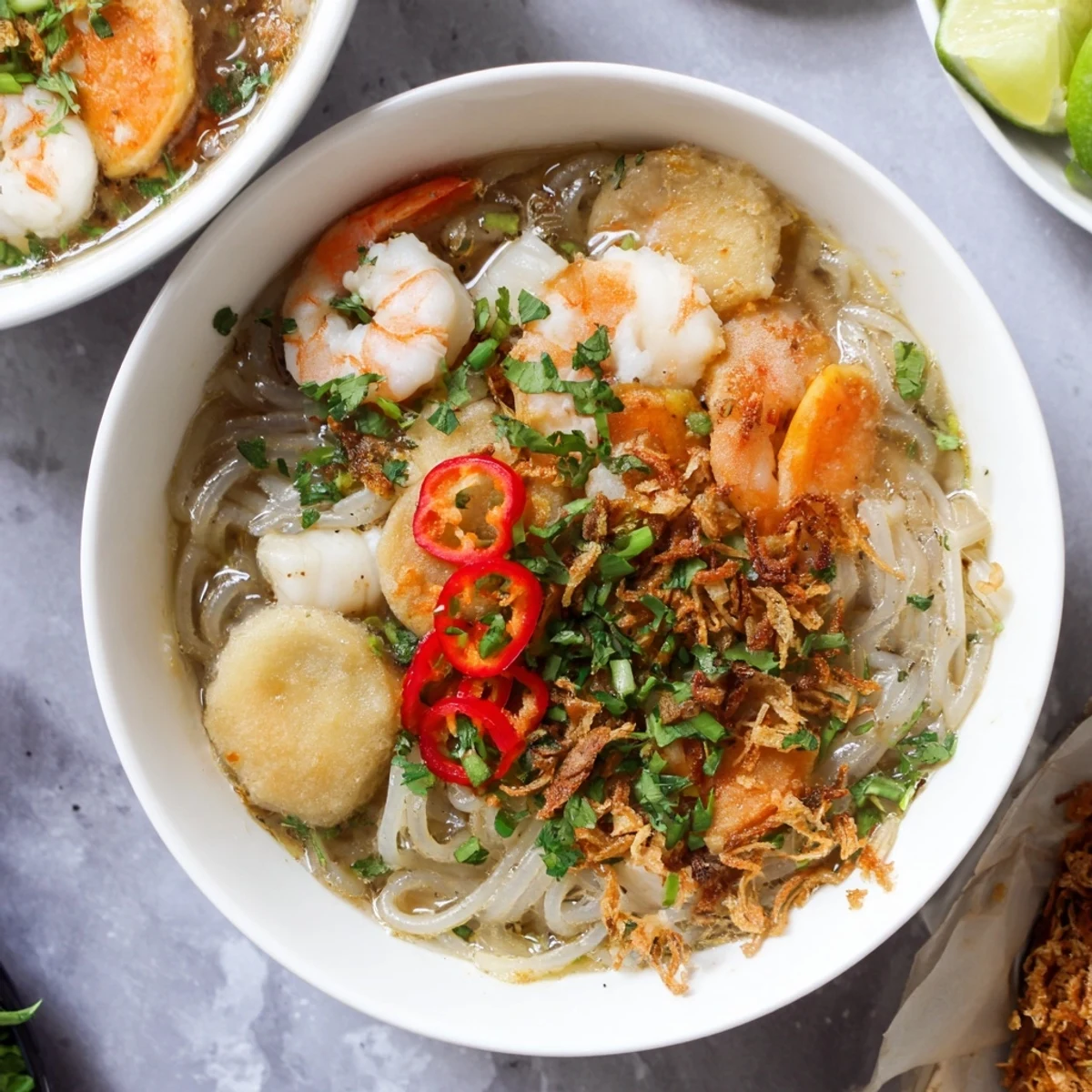
 Banh Canh Cua brings the heart of Vietnamese cooking to your kitchen with its signature thick tapioca noodles swimming in a deeply aromatic broth. The foundation builds from simmered pork bones and chicken stock, infused with onion, garlic, fish sauce, and just enough sweetness to balance the savory depth.
Fresh crab meat and tender shrimp join sliced fish cakes, creating layers of seafood flavor that permeate every spoonful. The noodles offer a satisfying chew that perfectly complements the tender proteins, while fried shallots and fresh cilantro add essential texture and brightness.
This versatile bowl welcomes customization—adjust the seasoning with lime wedges, chili slices, and extra black pepper right at the table. The entire process takes just over an hour, yielding four generous servings of restaurant-quality comfort food.
The steam rising from my grandmother's kitchen always meant banh canh was on the stove. She'd wake at dawn to simmer pork bones until the house smelled like comfort itself, those thick chewy noodles slippery and hot in every spoonful. Now when I make it, I understand why she never rushed this soup.
Last winter, my friend Minh came over after a terrible week at work. I put a pot of this on and we sat at the counter, slurping noodles and talking until the broth was gone. She said it was the first time she'd felt grounded in days.
Ingredients
- 1.2 liters chicken stock: Use a good quality stock or make your own for the best foundation
- 400 g pork bones: Blanching first removes impurities that cloud your broth
- 1 yellow onion: The natural sweetness balances the salty fish sauce perfectly
- 2 cloves garlic: Smashed not minced releases flavor more gradually into the soup
- 1 tbsp fish sauce: This is the soul of Vietnamese cooking, dont be shy with it
- 300 g fresh crab meat: Fresh crab makes all the difference but imitation works too
- 150 g shrimp: Peel and devein but leave the tails on if you want pretty bowls
- 200 g fish cakes: Slice them thick so they dont disappear in the soup
- 400 g banh canh noodles: These thick tapioca noodles are what make this dish special
- 2 tbsp fried shallots: Make extra, theyre the crunch that brings everything together
Instructions
- Build your broth base:
- Combine chicken stock, blanched pork bones, onion halves, smashed garlic, salt and sugar in a large pot. Bring everything to a rolling boil then drop to a gentle simmer. Let it work for 30 minutes, skimming any foam that rises to the top.
- Season and strain:
- Stir in the fish sauce and taste your broth. Remove the pork bones and onion pieces theyve done their job. The liquid should be clear and deeply fragrant.
- Cook the shrimp:
- Add peeled shrimp to the simmering broth and cook for just 2 to 3 minutes. Watch them carefully, overcooked shrimp turns rubbery. Remove with a slotted spoon and set aside.
- Infuse the crab:
- Gently simmer crab meat and sliced fish cakes in the broth for 5 to 7 minutes. The crab sweetens the soup while fish cakes absorb all those savory flavors.
- Prepare the noodles:
- Cook banh canh noodles according to package directions, usually just a few minutes. Drain and rinse with cool water so they dont clump together.
- Assemble your bowls:
- Divide noodles among four deep bowls. Arrange shrimp, crab meat and fish cakes on top so each bowl gets a bit of everything.
- Ladle and garnish:
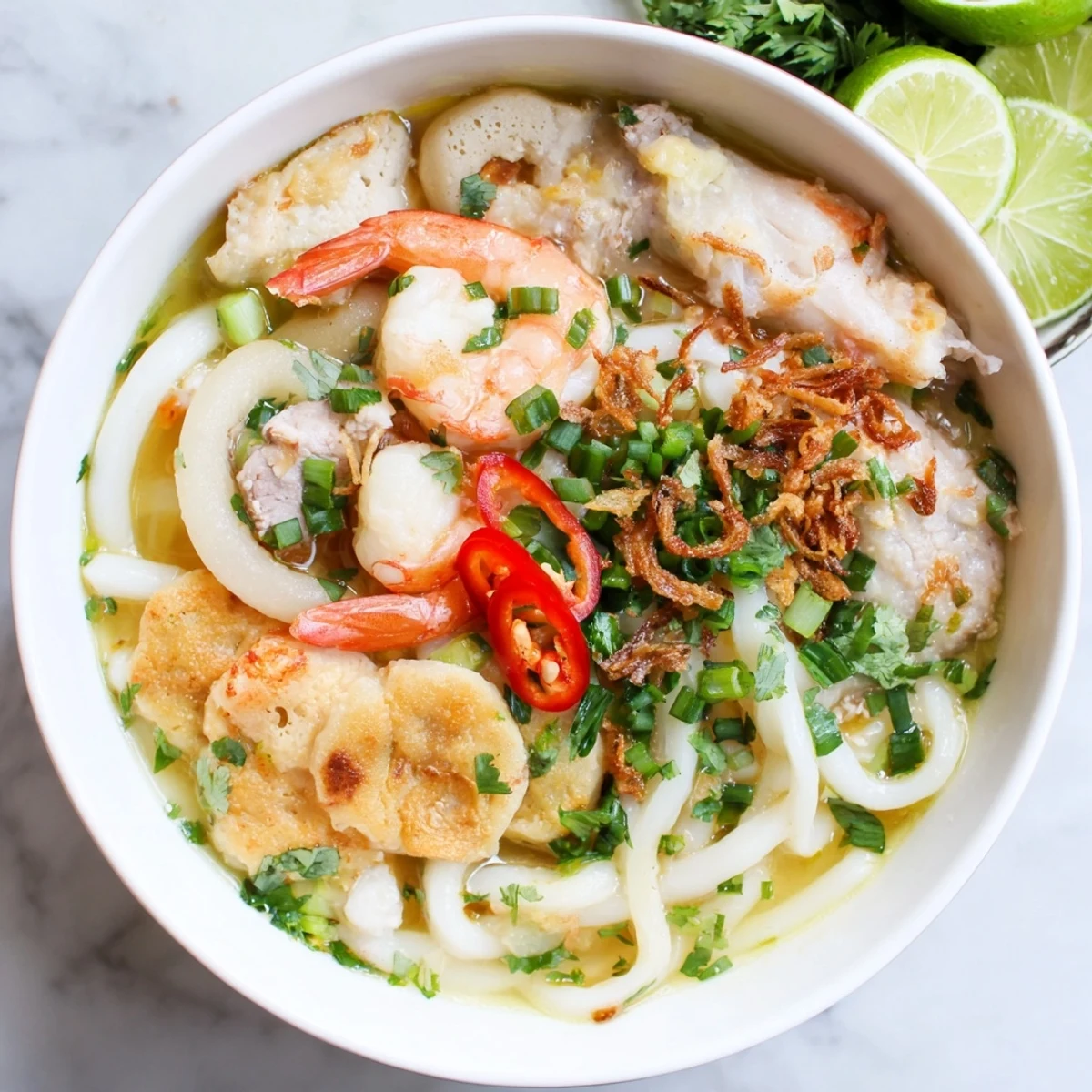
- Pour hot broth over the noodles and seafood. Top with sliced spring onions, fried shallots, cilantro, chili slices if you like heat and lime wedges on the side.
 Pin it
 My aunt makes this every year for Tet and the kitchen becomes this chaotic assembly line of cousins chopping garnishes and tending the broth. Its loud and messy and absolutely perfect.
Getting the Broth Right
The secret is patience during that initial simmer. Let the pork bones and onion work their magic undisturbed, skimming only when necessary. A clear broth isnt just about looks, it means cleaner purer flavor in every spoonful.
Noodle Know How
Banh canh noodles are made from tapioca and rice flour, giving them that signature bounce. Rinse them after cooking or theyll turn into one solid mass in your bowl.
Make It Your Own
Some days I add quail eggs for extra protein, other times I skip the shrimp and double the crab. The broth is flexible, it welcomes whatever you have on hand.
- A splash of annatto oil gives the broth this beautiful golden glow
- Extra lime on the table lets everyone adjust the acidity
- Fresh chili slices at the end keep the heat bright and sharp
 Pin it
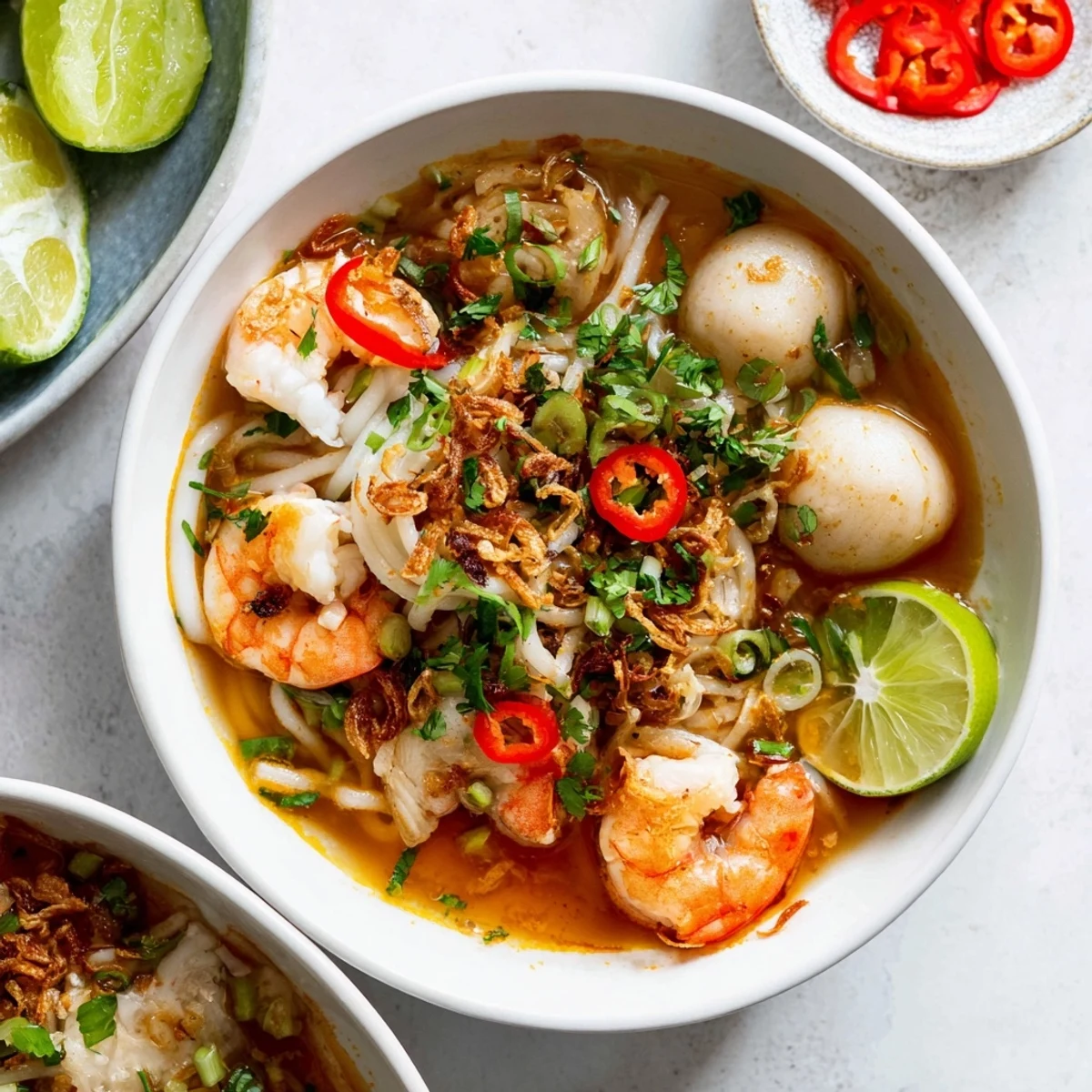
 Theres something about a steaming bowl of banh canh that fixes whatever feels wrong. Simple food, deeply restorative.
Recipe FAQs
- → What makes Banh Canh Cua different from other Vietnamese noodle soups?
-
The distinguishing feature is the thick, chewy tapioca noodles called banh canh, which provide a satisfying texture unlike the thinner rice noodles found in pho or bun. The broth also tends to be richer and slightly thicker, thanks to the crab and pork bone base that creates a more robust, velvety consistency.
- → Can I use imitation crab or frozen crab meat?
-
Absolutely. Frozen crab meat or high-quality imitation crab works beautifully in this dish and is often more accessible. The key is to add these toward the end of cooking to prevent them from becoming tough, allowing just enough time to absorb the broth's aromatic flavors.
- → How do I prevent the tapioca noodles from sticking together?
-
After cooking the noodles according to package directions, drain them and rinse briefly with cool water. Toss them with a small amount of oil if they'll sit before serving, and keep them separate from the broth until you're ready to assemble the bowls.
- → What can I substitute for fish cakes?
-
If fish cakes aren't available, you can increase the amount of shrimp and crab, or add thinly sliced pork tenderloin. Some cooks also include quail eggs or tofu puffs as protein alternatives that absorb the broth beautifully.
- → How long does the broth keep and can it be made ahead?
-
The broth develops even deeper flavor when made a day ahead—simply cool, refrigerate, and skim off any solidified fat before reheating. It keeps well for 3-4 days in the refrigerator or up to 3 months in the freezer. Cook fresh noodles and proteins when ready to serve for the best texture.
- → Is this dish spicy?
-
The soup itself is not inherently spicy. Fresh chili slices are served on the side, allowing each person to adjust the heat level to their preference. The aromatic broth focuses on savory, umami flavors rather than heat.